Non Homogenized Milk: A Dietitian Review
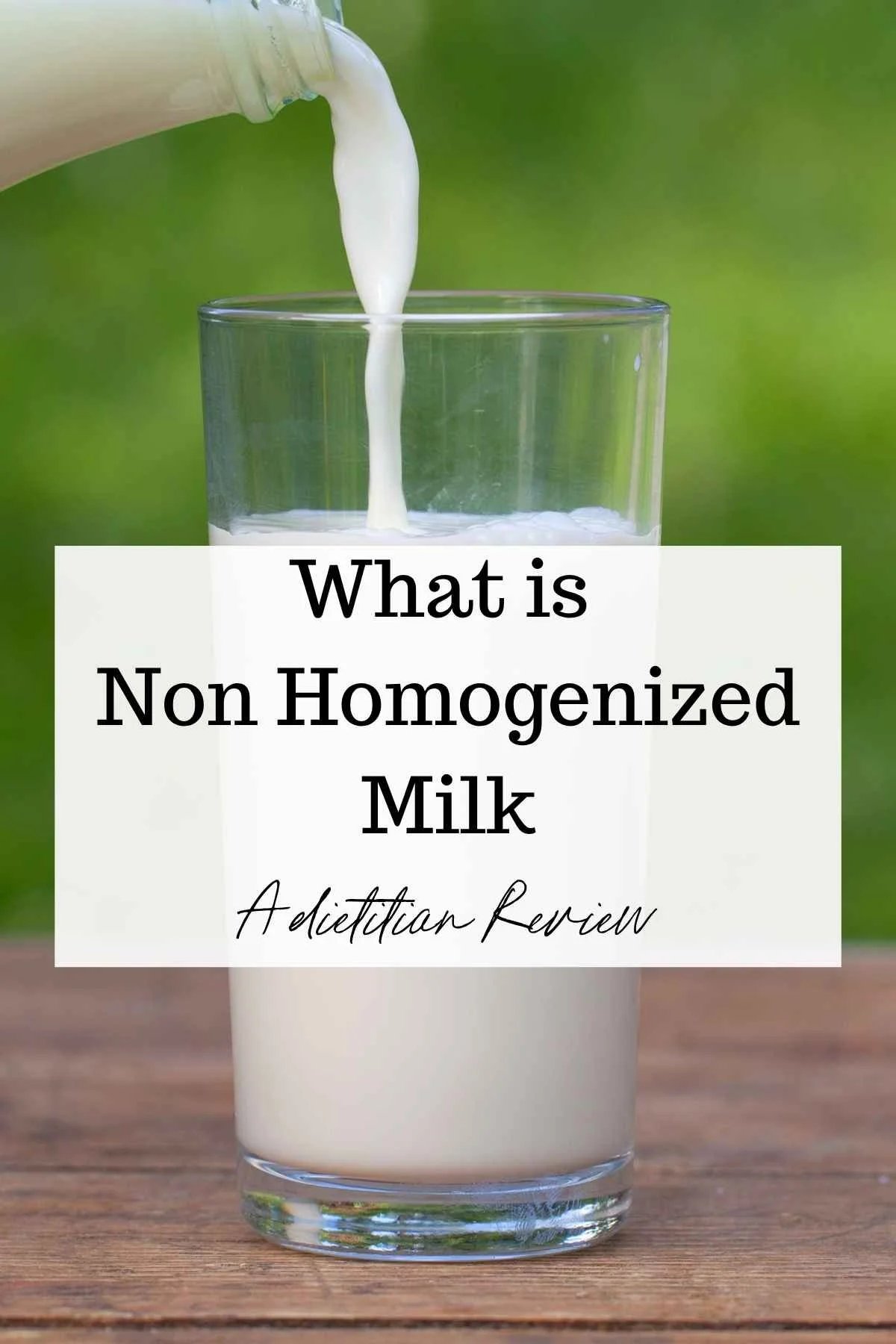
Non homogenized milk, or cream top milk, is one of many milk options available to you at the grocery store, but is it the right option for you? In this dietitian review we cover what is non homogenized milk, the benefits of non homogenized milk, and whether or not you should add it to your grocery cart.
Non Homogenized Milk
When we buy a carton of milk, we have come to expect our milk to appear a certain way. That is, we expect to see milk that is uniform in color, texture, and appearance. This tried and true appearance is because most milk at the stores is homogenized and actually isn’t how milk has always looked.
However, it appears that some people are missing the good ol days are there is a revitalized interest in purchasing non homogenized milk, otherwise known as cream top milk. As someone who loves to see diversity in the dairy aisle, my goal is to educate on the dairy products you will see there.
Hey, I’m Lauren! I’m a registered dietitian and I’m on a mission to help you pick through food fact or fiction to ultimately give you back your food confidence. Today we are going to discuss what is non homogenized milk, the benefits of non homogenized milk, and if you should add it to your cart.
Pasteurized milk vs homogenized
We need to start here because it’s incredibly important for you to understand that, while these two terms seem to be used interchangeably, pasteurized milk vs homogenized refer to two different products made through two different processing methods.
While these treatments are often done back to back during processing, you can have one without the other. So you can have pasteurized non homogenized milk or you can have raw non homogenized milk (which means unpasteurized).
So, what’s the difference between pasteurized milk vs homogenized?
Pasteurized milk: Pasteurization refers to a heat treatment done to products, like milk and wine, that removes any potentially harmful pathogens (such as E.Coli, Listeria, Salmonella, and Campylobacter) and makes the product safe to consume.
This is no small task and this process has dramatically increased the safety of our food. Because pasteurization removes harmful pathogens and lowers enzyme activity, pasteurization also extends shelf life and keeps the milk safe to consume and at peak quality for longer.
Note: pasteurization is done to increase the safety of milk and results in a product that is safer for consumption, nothing is added to the milk during this process. Pasteurization can be done on milks of all kind including cream top milk, low fat milk, whole milk, and more.
The opposite of pasteurized milk is raw milk which is unpasteurized milk that has never been heat treated.
Homogenized milk: Homogenization is a process done to milk that, simply put, reduces the fat particle size in milk and distributes those fat particles evenly throughout the milk. This results in the homogenous milk product we know and love… one that is uniform in its white color and consistent in texture and appearance.
Note: unlike pasteurization, homogenization is not aimed at increasing the safety of the milk but is instead aimed at creating a uniform product that consumers prefer. Homogenization does not alter the nutritional value of milk and the vitamins and minerals of dairy milk are unchanged.
The vast majority of non homogenized milk is whole milk, meaning it has all of its naturally occurring fat content present, but you can also find some reduced fat non homogenized milk as well. There are no skim or low fat non homogenized milks.
So that’s the difference between non homogenized milk vs homogenized- one has had the fat particles made smaller and evenly distributed while the other simply has not. Remember, you can buy non-homogenized milk that has been pasteurized at some stores. Raw milk is non-homogenized milk.
Even though these two words are presented side by side on most milk cartons and despite your favorite influencer lumping them together as the same thing, these two processes are very different and completely independent from one another.
Because it has not been treated for harmful pathogens, I do not recommend consuming raw milk, however pasteurized non-homogenized milk is perfectly safe to consume and many people prefer the flavor and mouthfeel. If you want a non homogenized milk brand then consider Kalona Supernatural.
I will also quickly note here that non-homogenized milk is not the same thing as organic milk or grass-fed milk… organic refers to the farming method and grass-fed refers to the type of diet the cows consumed. Remember, homogenization just refers to what happens to the fat particles in the milk.
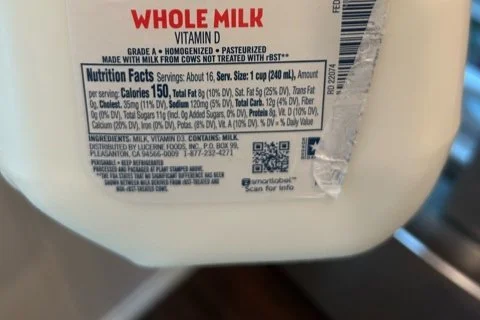
You can see Homogenized and Pasteurized listed close to one another.
What is Non-Homogenized Milk?
Now that we have discussed pasteurization vs homogenization, let’s focus in on non homogenized milk.
Non homogenized milk is milk that has not been homogenized, meaning its milk fat globules are still fully intact, larger in size, varying in length, and capable of separating out from the liquid. The purpose of homogenization is to reduce fat particle size and evenly distribute those particles throughout the milk to create a uniform product that does not separate on standing.
Cow’s milk is comprised of fatty acids of varying sizes and an aqueous solution. With fat being hydrophobic, meaning “afraid of water,” the fat in milk will do everything it can to get away from the water content of milk.
When non-homogenized milk is allowed to sit in the refrigerator, it will form a layer of cream on top of an almost translucent liquid (which is now skim-milk or fat free milk) and what you are seeing are those fat particles separating out from the liquid. This is what non homogenized milk is also called cream top milk.
It’s for this reason that homogenization even began! Homogenization was invented by August Gaulin in 1899 to prevent the separation of fat and liquid in milk. It was around this time that milk delivery to homes was changing and the milk was beginning to be stored in containers that people could see through.
Some consumers didn’t like the look of the cream and fluid separation or they just got sick of shaking their non-homogenized milk to mix the fat back into the liquid. It wasn’t until the 1900’s that homogenization began to be fully adopted into the milk processing steps and the result was a delicious and safe product that did not separate in the fridge.
Why Do People Want Non-Homogenized Milk?
There are a variety of reasons why there has been a resurgence of interest in non-homogenized milk. I spent a lot of time digging into the claims and research behind it but the main things I noticed in my research were:
There weren’t many studies done in humans. If they were, many are observational and rely on self reporting, which isn’t nothing but also isn’t considered a rigorous testing method.
There weren't many studies that examine the homogenization process by itself and exclude other factors.
This makes it difficult to draw conclusions from these studies. It’s definitely an area that will continue to grow in research but currently many of the claims that surround non-homogenized milk have been refuted or simply do not have the scientific backing to be claimed as true.
Let’s look at some of the reasons why people are inclined to buy non-homogenized milk!
Personal Sensory Preference:
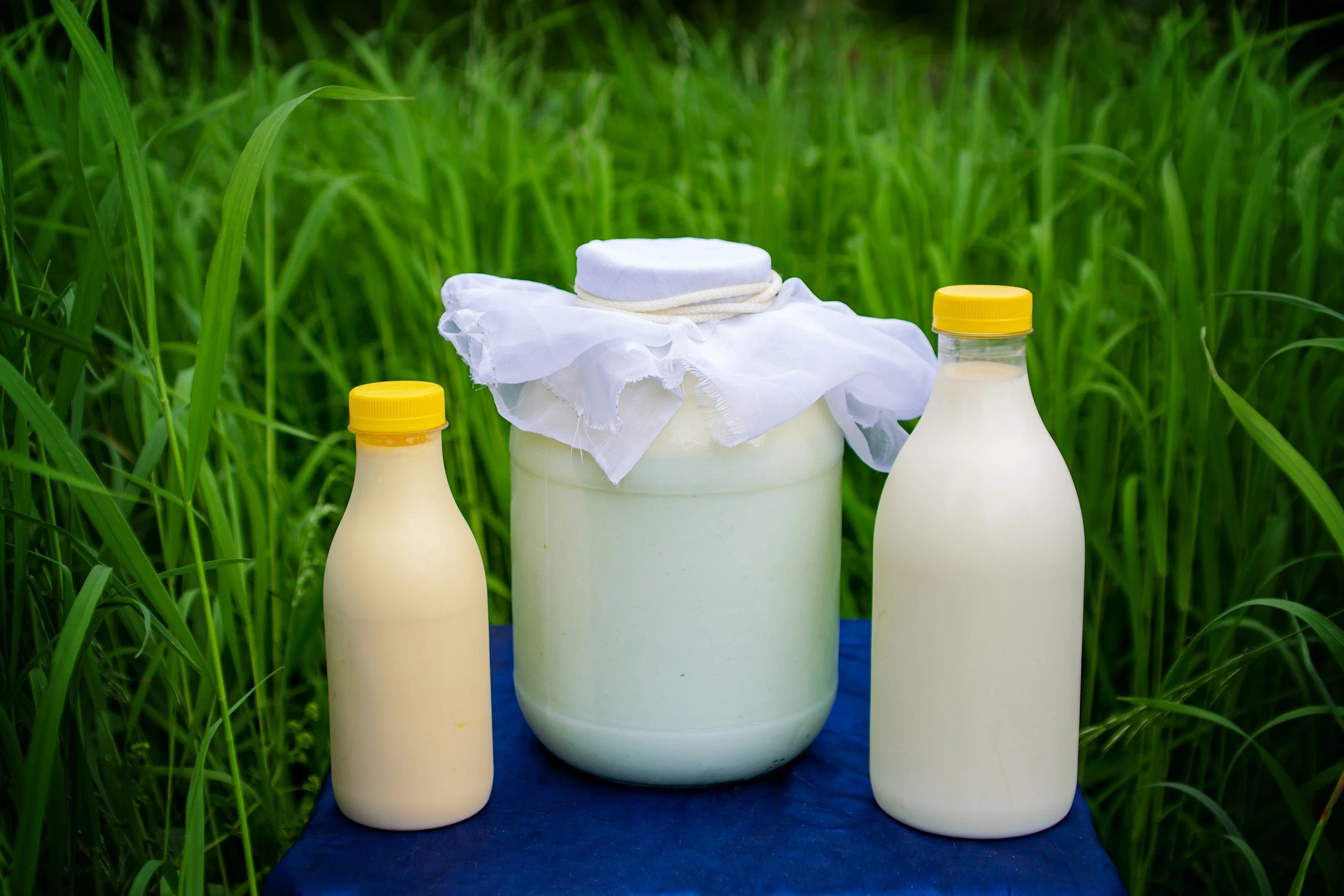
General preference for the mouthfeel and flavor
Some people simply prefer the mouthfeel and flavor of non-homogenized milk and this is something that research cannot prove or disprove. You like it? Buy it.
Use in recipes
Some recipe developers claim that the intact fat globules of non-homogenized milk seems to work better in recipes. In addition to this, other people want to use the cream that naturally separates from non-homogenized milk in their baking, coffee, or other kitchen adventures and be left with the non-fat milk to use throughout the week. You like to bake with it? Buy it.
More natural:
Now, this one isn’t wrong but also doesn’t mean that non-homogenized milk is inherently better. Non-homogenized milk will contain the natural cow’s milk fat structure. You also are most likely to find whole non homogenized milk, which contains all of the naturally occurring fat content.
However, remember that nothing is added to or taken from the milk during the homogenization process. The difference between the products is in fat structure, fat size, and fatty acid dispersement within the liquid part of the milk.
Health Nutrition Claims of Cream Top Milk
Does homogenized milk increase risk for cardiovascular disease: the concern is that, if the fat particles are smaller (with some of these fat particles being saturated fat), your body can absorb more of them more rapidly and this can lead to heart disease or exacerbate issues for those with an existing heart condition. This is simply an unfounded theory and has not been proven in research.
There are also theories about certain enzymes and specific forms of beta-casein (one of the primary milk proteins) that have not been proven in research. Interestingly, homogenized milk has actually been shown to reduce risk for certain cardiovascular diseases such as stroke, hypertension, and more and this research is done on -you guessed it - homogenized milk which debunks a lot of these theories.
Does homogenized milk increase risk for milk allergy: There are a few theories behind this with one being that casein (one of the primary proteins in milk) structure has been altered which can increase risk and reaction to those with a milk protein allergy.
Now, this topic has been researched in animal models and produced mixed results but we know that we also cannot make direct connections from animal studies to us. There are theories that non-homogenized milk will give less of an allergic response because its protein structures have not been altered or reorganized as they do in homogenized milk but unfortunately these are just theories.
Though the organization of the proteins are different, the milk proteins in either milk are still present at levels high enough to induce an allergic response. There are also stories out there about kids raised drinking non-homogenized milk tend to have lower rates of milk allergy but studies have not been able to attribute these findings solely to the intake of non-homogenized milk with lifestyle and allergen exposure at early ages also being factors.
If your child has a true milk allergy, the safest and best option at this moment is to keep milk protein out of the diet.
Non-homogenized milk is better for those with lactose intolerance: This is not true… and I think you may spend a lot of unnecessary time in the bathroom testing this one out. The lactose content of dairy is not altered with the homogenization process.
There is also discussion about the rate of gastric emptying, which is certainly an important factor in lactose intolerance.
One way to slow down gastric emptying is to buy a fuller fat milk, like whole milk, or you can also drink your milk with a protein and fat containing meal. Skim milk, or milk that does not have the fat in it, tends to digest faster so you would want to pair this with a meal. If you want milk that is truly lactose intolerant friendly, buy lactose free milk.
Does homogenized milk increase risk for diabetes: This is another theory that has not been supported by research. Similar to the cardiovascular disease conversation, milk has actually been shown time and time again to lower risk for developing type 2 diabetes, may increase insulin sensitivity, and lower glucose levels after you eat. Milk is a blood sugar balancing food.
Note- these studies are done on homogenized milk unless otherwise noted.
Lower absorption of nutrients in homogenized milk: this theory really jumps off the idea that homogenization changes the nutritional profile of milk, which it does not. In fact, research shows that some of the nutrients in homogenized milk are actually better absorbed than those found in non-homogenized milk.
Non-homogenized milk is more nutritious: non-homogenized milk is an excellent source of many nutrients… but it is not a better source than homogenized milk. Both are incredibly nutrient dense and feature key nutrients that support your health.
Note that me saying these claims are not supported by science is not me saying non-homogenized milk is dangerous, unsafe, or that these claims may not be true for you individually. It’s perfectly safe to consume and will have nutritional benefits. If it’s pasteurized, it is safe to drink.
My point is that if you are purchasing non-homogenized milk because of some of the claims listed above, know that many of these are not proven in science and homogenized milk itself has been shown to promote health and protect against certain diseases.
Is Non-Homogenized Milk Good For You?
Is non homogenized milk healthy? Yes.
Is non homogenized milk healthier than homogenized milk? Not from a nutrition perspective.
Cream top milk is going to have all the nutrients we know and love of regular, homogenized dairy milk. Dairy milk contains 13 essential nutrients including high quality protein, calcium, Vitamin D, phosphorous, potassium, niacin, Vitamin A, Vitamin B12, iodine, selenium, riboflavin, pantothenic acid, and zinc.
This vast nutrient profile in milk plays an important role in reducing risk for chronic disease like obesity, type 2 diabetes, and cardiovascular disease. In fact, a review of 41 different studies that analyzed 45 unique health outcomes shows that 200 ml of milk intake (about a cup) per day was linked with reduced risk for stroke, hypertension, colorectal cancer, type 2 diabetes, metabolic disorder, obesity, osteoporosis, and more.
The nutritional differences between these two products is not remarkable but that doesn’t mean that cream top milk isn’t the product you prefer.
What are the pro’s and con’s of cream top milk?
Pro’s:
Unique flavor profile and thicker mouthfeel that may be preferred by consumers.
Considered to be less processed by consumers and is more similar to the natural form of cows milk.
Larger fat components may slow down digestion which may offset feelings of stomach discomfort due to lactose.
Features the nutrient density we expect in dairy milk (which are the same nutrients found in homogenized milk, I might add).
Con’s:
Separation of cream and liquid can reduce the convenience of milk.
There are fewer non homogenized milk brands so it may be harder to find and pricier to purchase.
Not as easily digested by those who are sensitive to fat.
May have a shorter shelf life. We will cry over this spilled milk!
Should I Buy Non-Homogenized Milk?
When it comes to homogenized vs. non-homogenized milk, I actually don’t have a horse in this race and I do support safe and diverse options in the dairy section of the grocery store. To me, both options are great options and you get to choose the one you simply prefer the flavor of!
As a dietitian, I will say that if you are purchasing cream top milk because of the refuted claims above, then I recommend saving your money and stick with homogenized.
As covered above, homogenization simply disperses the fat particles evenly throughout the milk. Nothing is added to the milk, nothing is taken away from the milk, this process simply changes the consistency and mouthfeel of the milk itself and results in a safe product that has a longer shelf life and tends to be more convenient for consumers.
Nutritionally, these products are essentially equivalent and have all the vitamins, minerals, and high-quality protein of dairy milk. Homogenized milk will be easier to find in the stores and more affordable, as it has become the standard especially here in the United States.
However, if non-homogenized milk is the milk that holds your heart, you can certainly go on a mission to find it as it is also safe and nutritious. Enjoy!
Like this post? You might also like:

Hey! I’m Lauren
I’m a Registered Dietitian who breaks through nutrition misinformation and answers your questions with evidence-based information to give you back your food confidence.